Personal project · 2 min 35 sec
Fifteen scenes written.
Ten survived.
A toddler and her companion ride a train through a safari that keeps getting stranger. The interesting part isn’t that AI generated it — it’s what had to exist on disk before any of it came back usable, and what got thrown away once it did.
The workflow
Claude writes it. Seedance shoots it.
Two tools, one loop. Claude holds the script, the shotlist and the prompts; Seedance 2.5 generates the footage. Every generation gets fed the same five things — and the discipline is that none of them are optional.
The locked design for anyone in the shot, attached to every cut — not just the first.
The look of the film: render target, palette, the frames already approved.
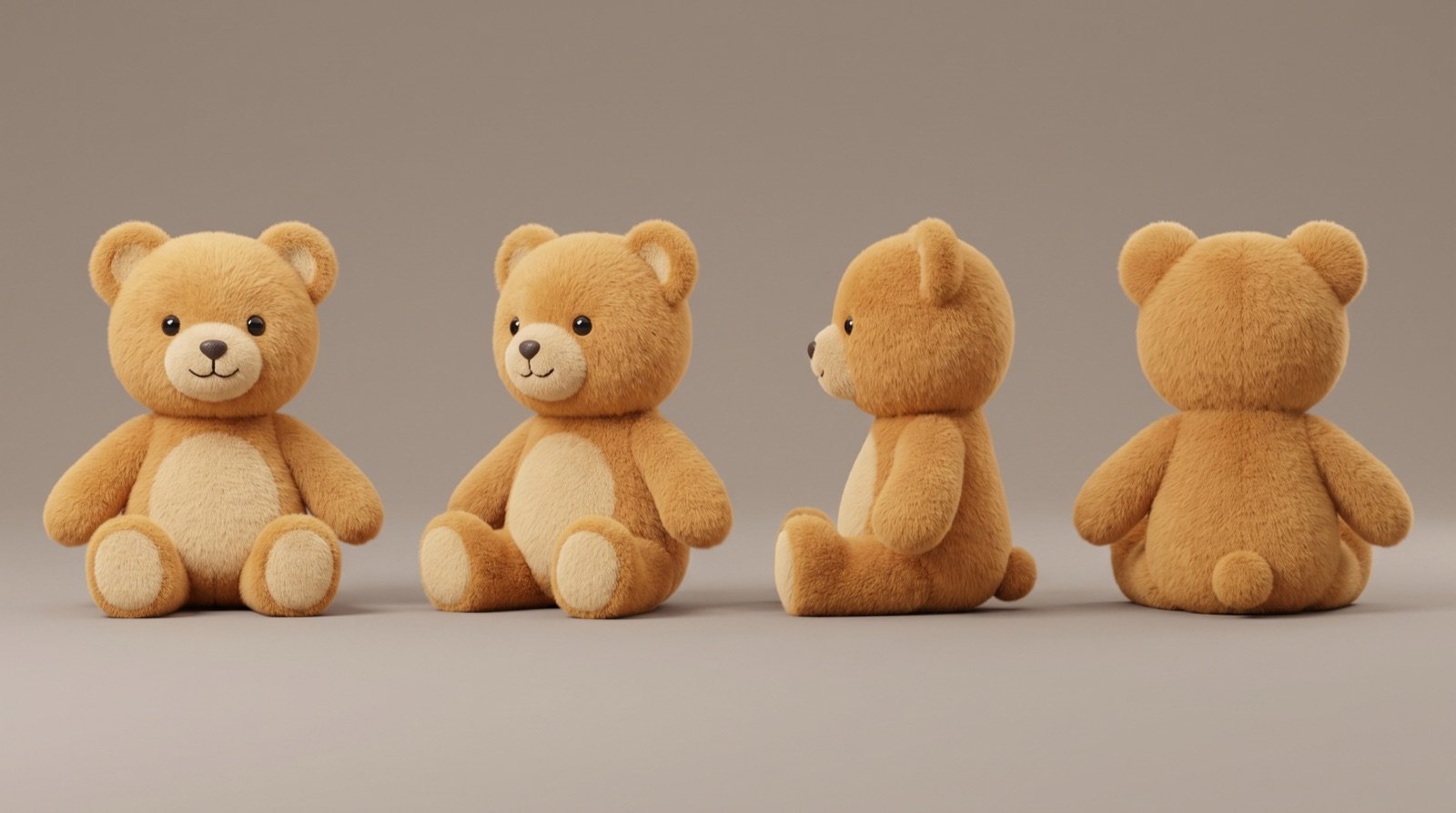
Teddy and the sticker book carry across scenes, so both are sheeted like characters.
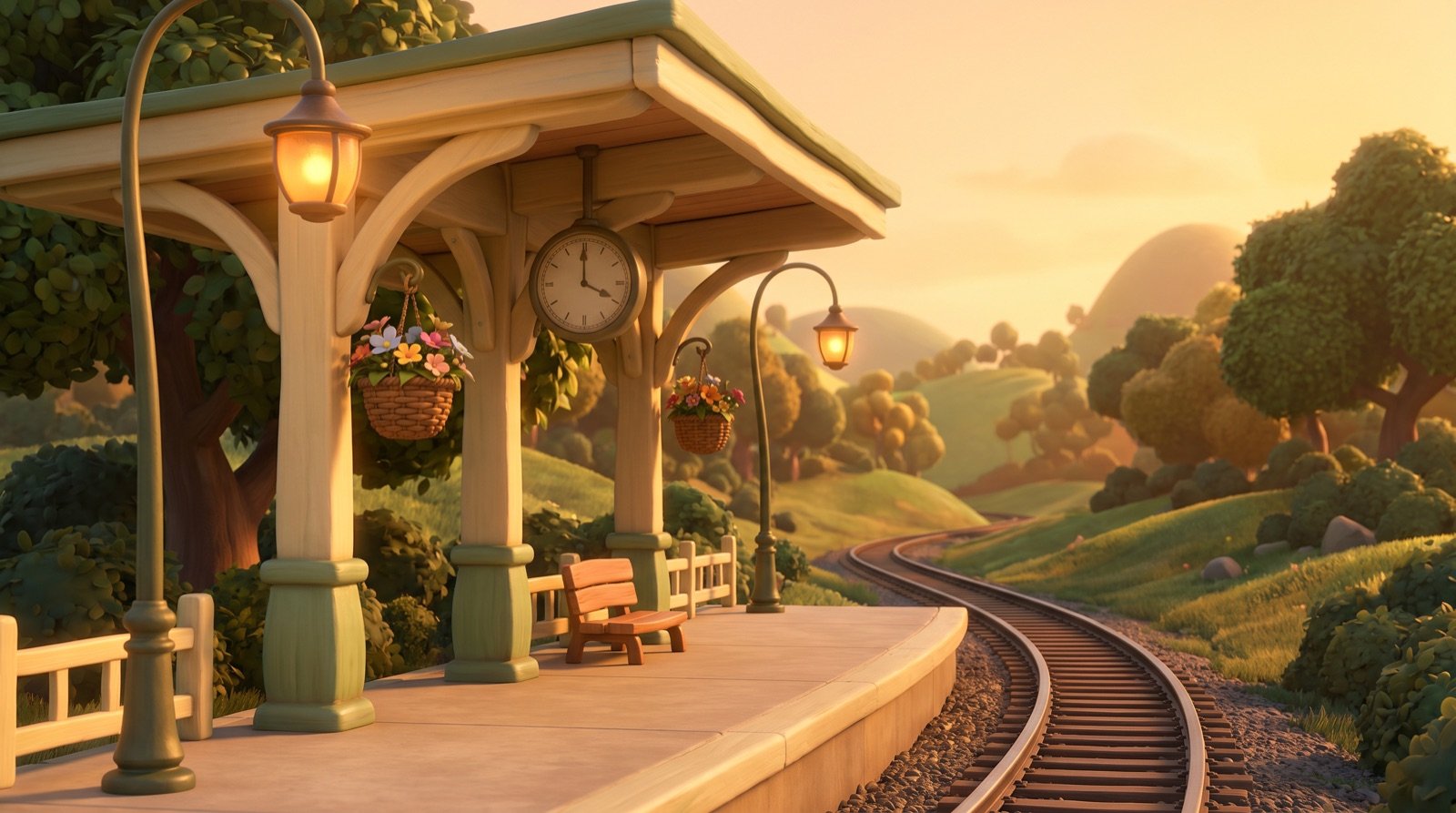
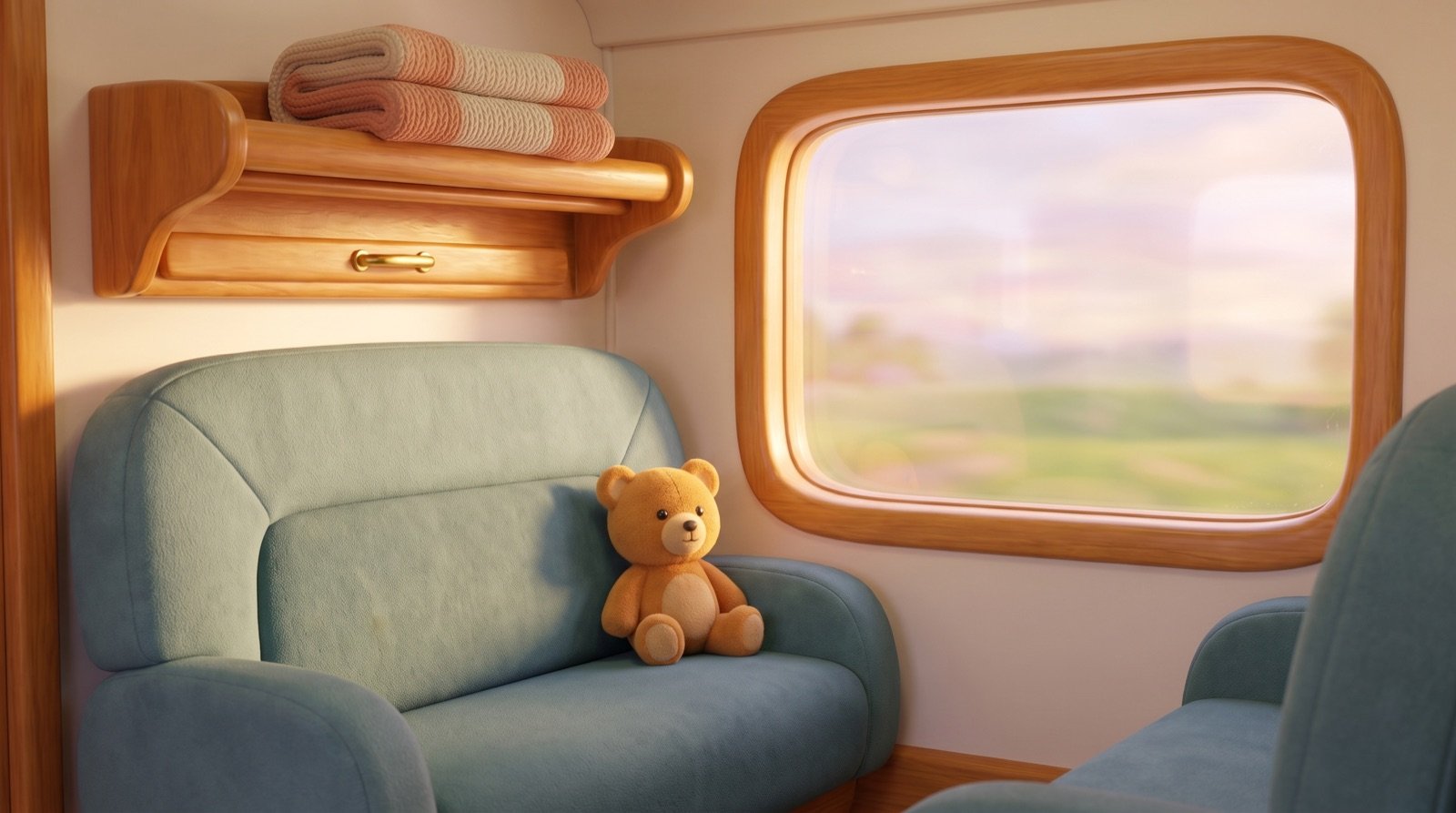
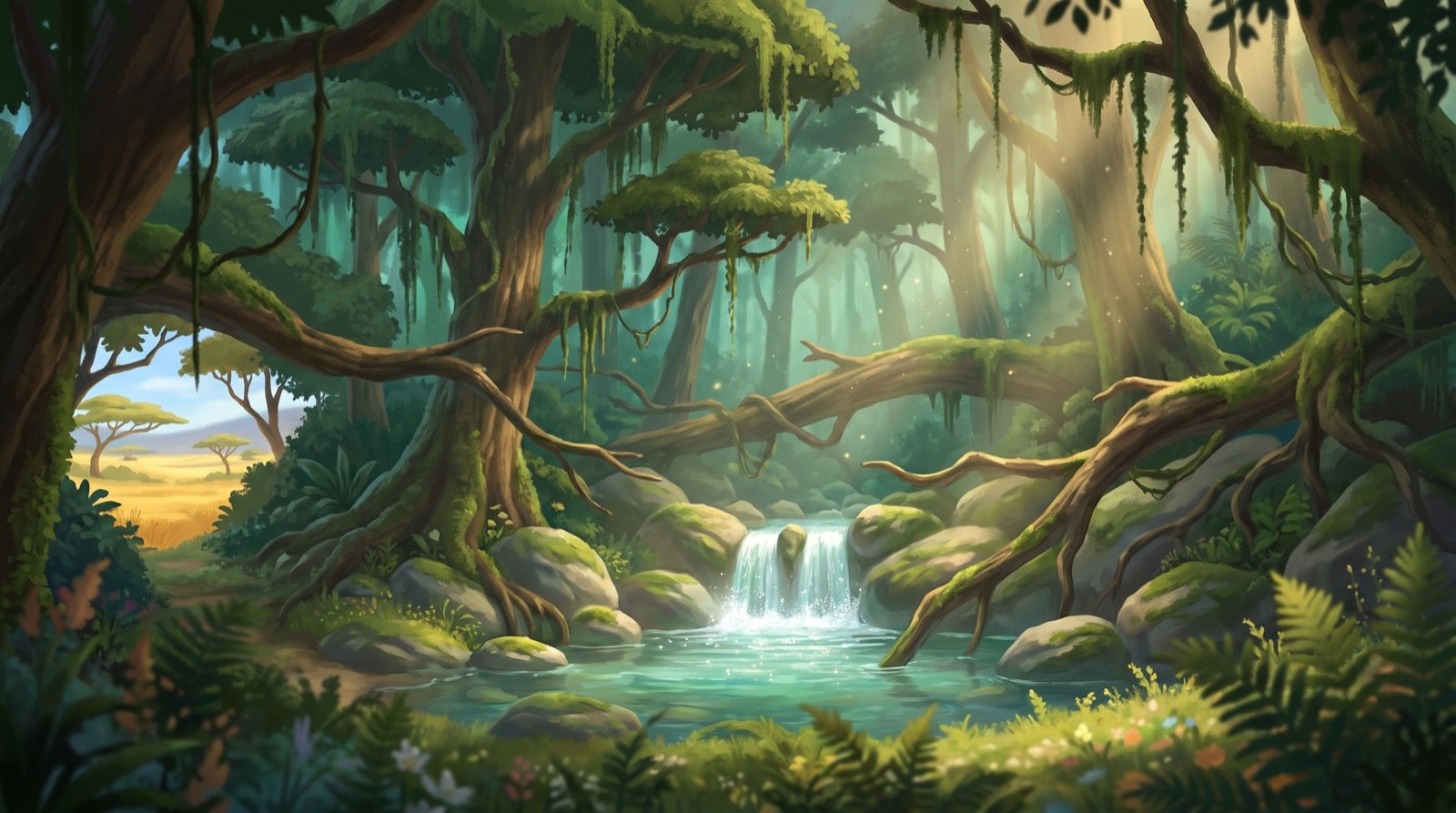
Cabin, station, forest, lake — locked as plates before shooting into them.
Not a description. A shot breakdown: how many cuts, how long each runs, what moves.
The actual problem
A generator has no memory between scenes.
Every scene here was generated separately. Nothing carries over on its own — not the girl’s face, not the dog’s proportions, not the colour of the seats. Ask ten times for “a toddler on a train” and you get ten different children. So the real production work happened before generation: building a set of locked reference sheets and attaching them to every single cut.
Character design
Locked before a single frame.
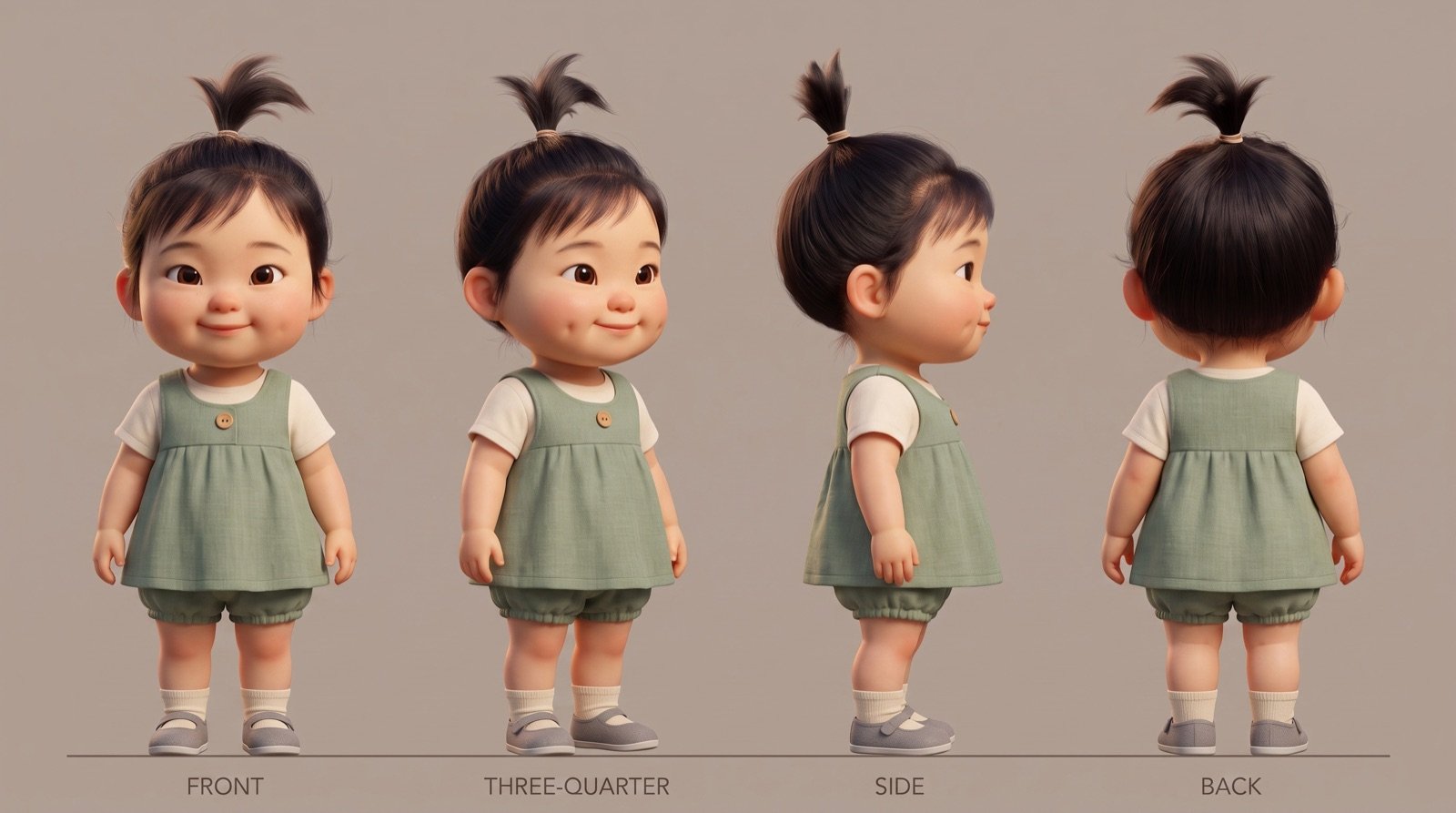
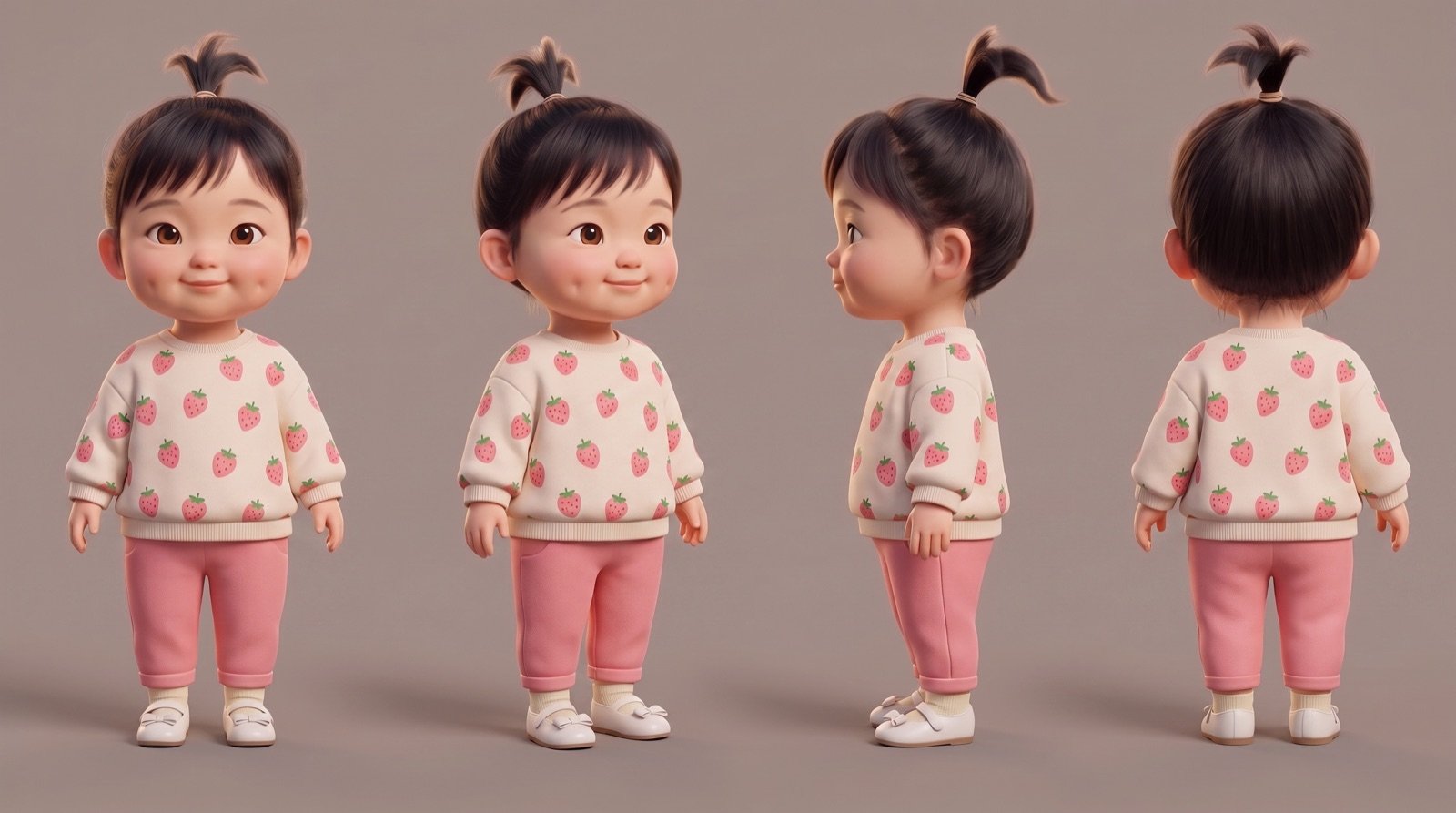
Each character was resolved as a turnaround first — silhouette, outfit, palette, expression range — and that sheet became a required attachment for any shot the character appears in.
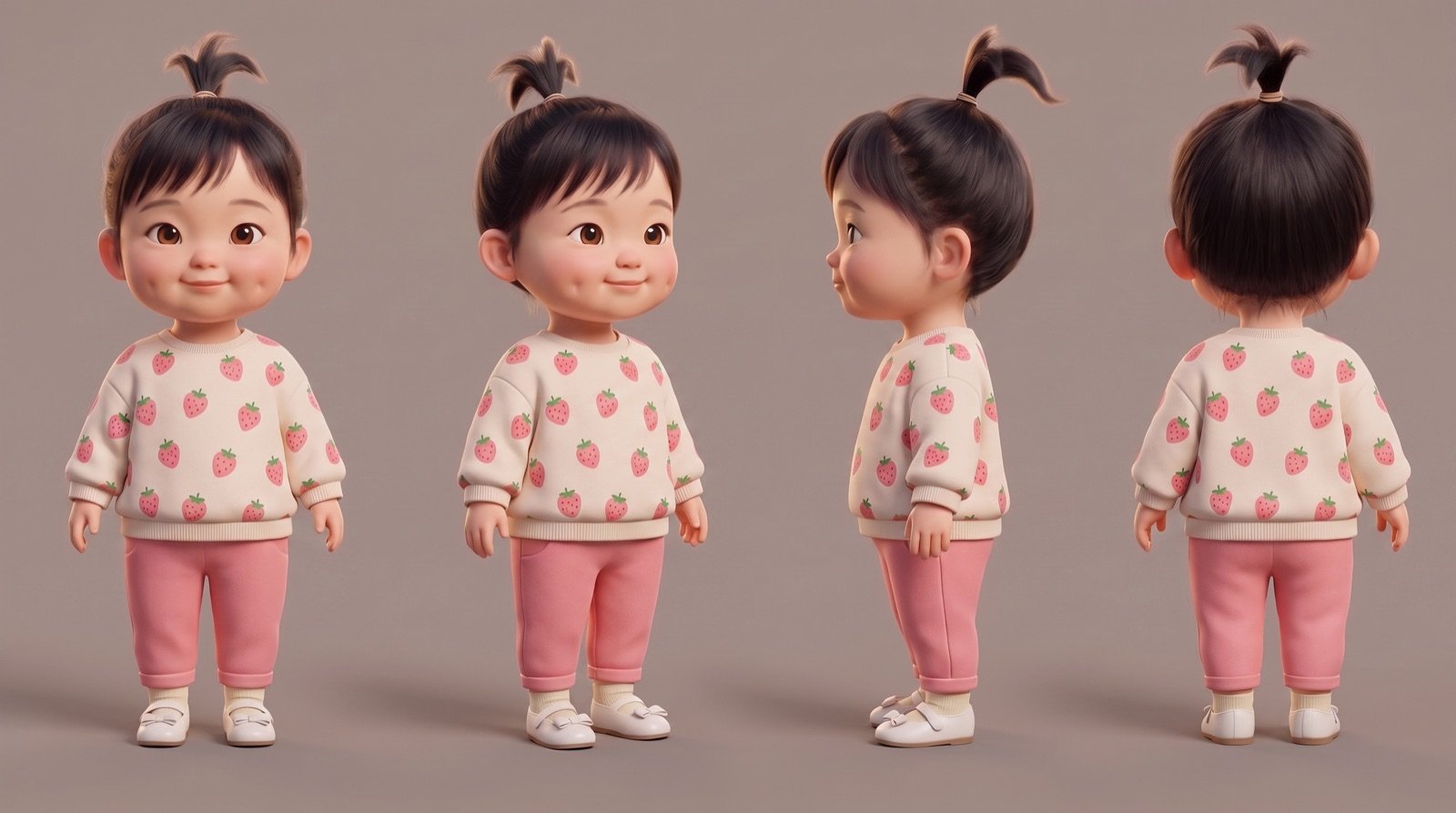
Ellie
The lead. Four views, locked outfit, pink held as the film’s only strong accent so she reads instantly against savanna gold and forest green.
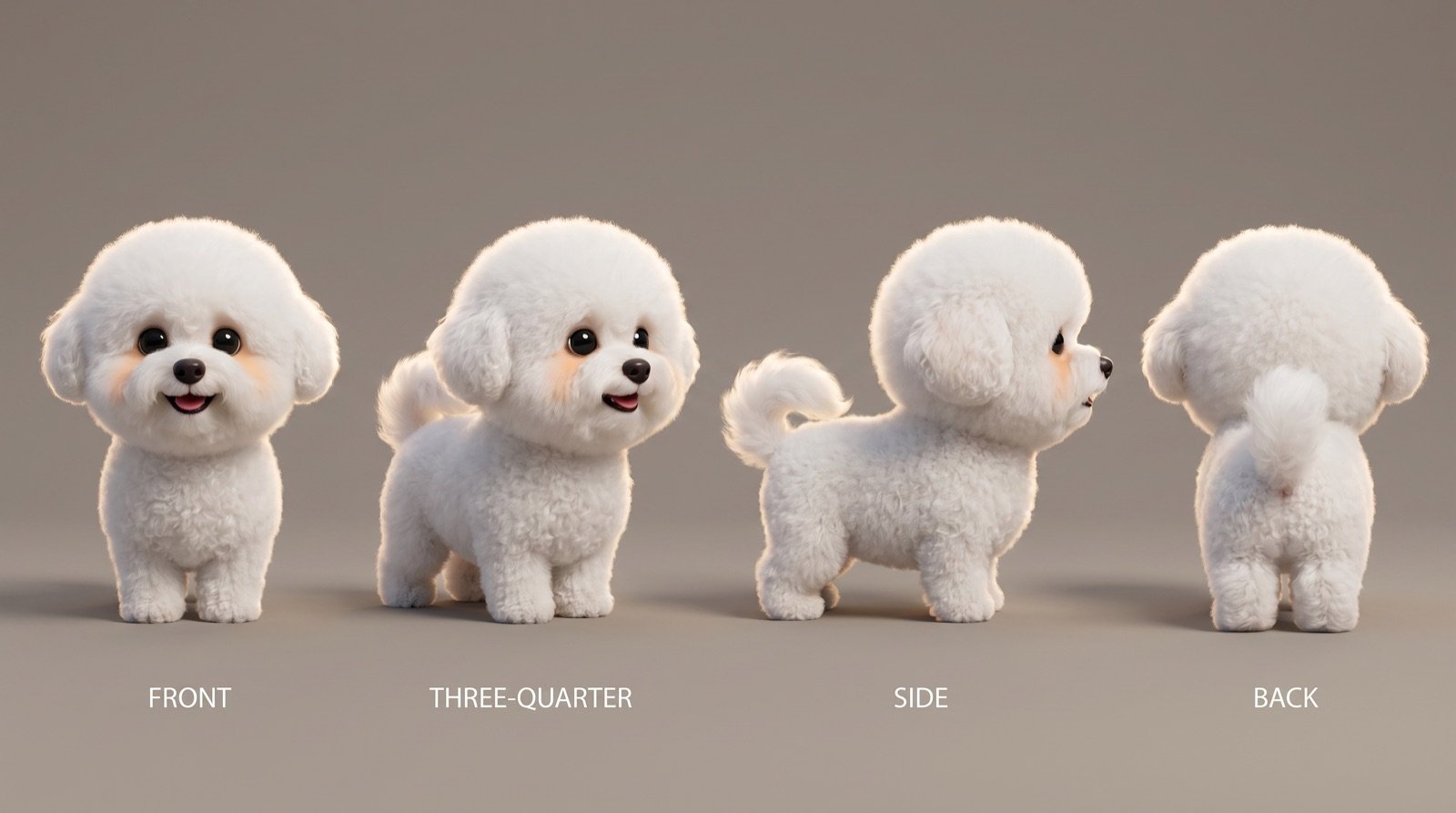
Mochi
The companion. Small enough to be a reaction shot on demand — most of the film’s comic timing is cut to him rather than to Ellie.
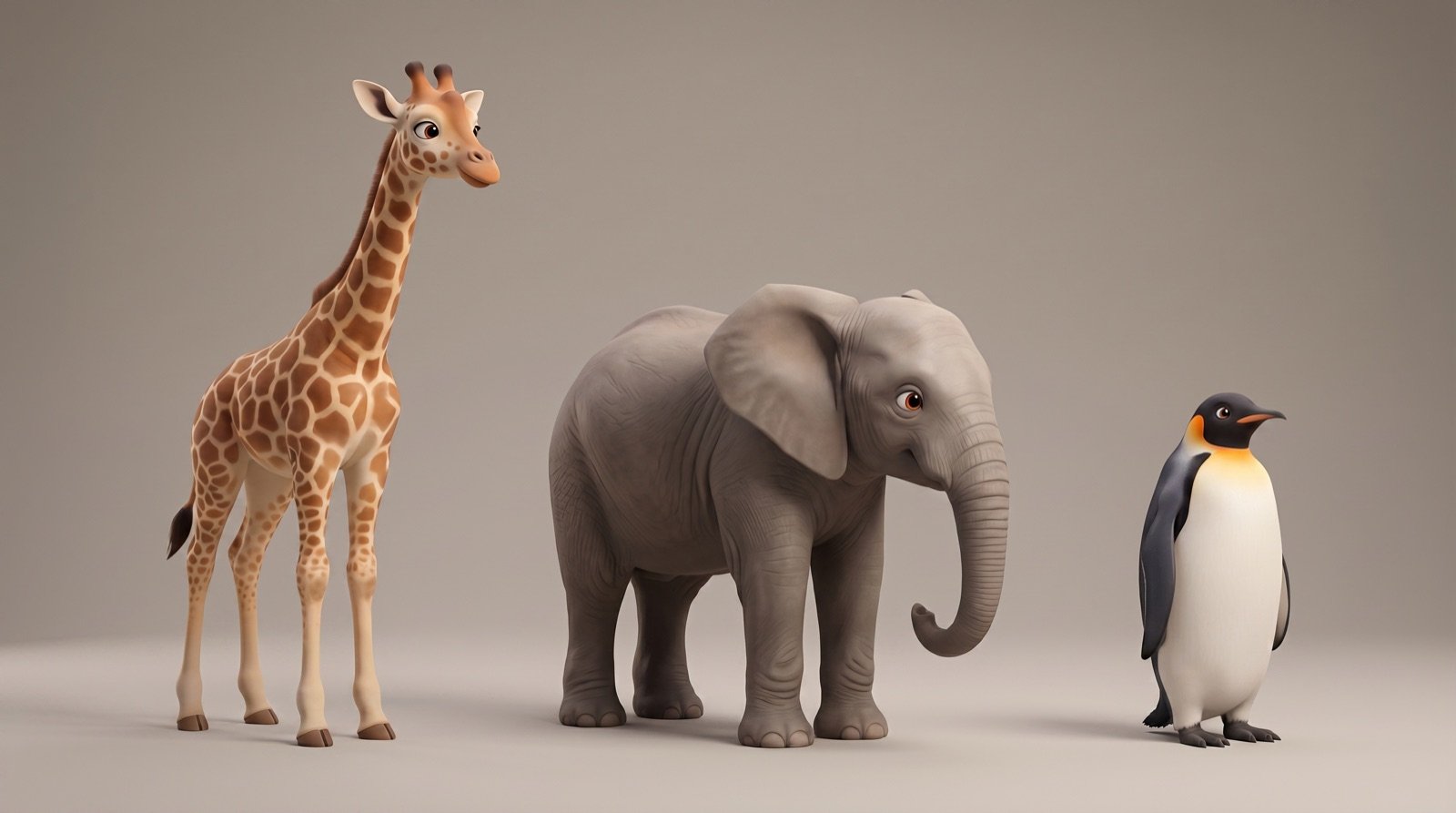
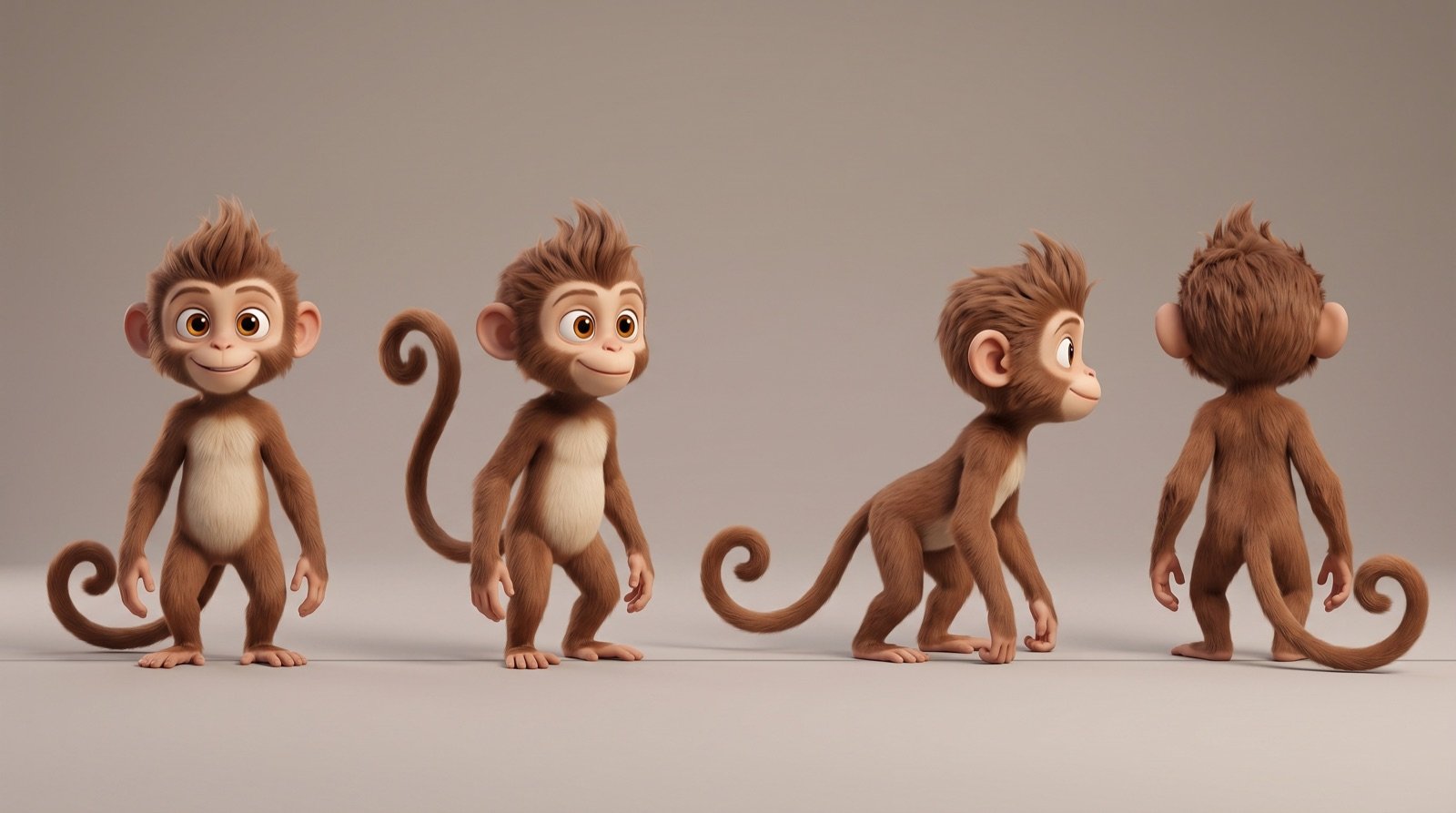
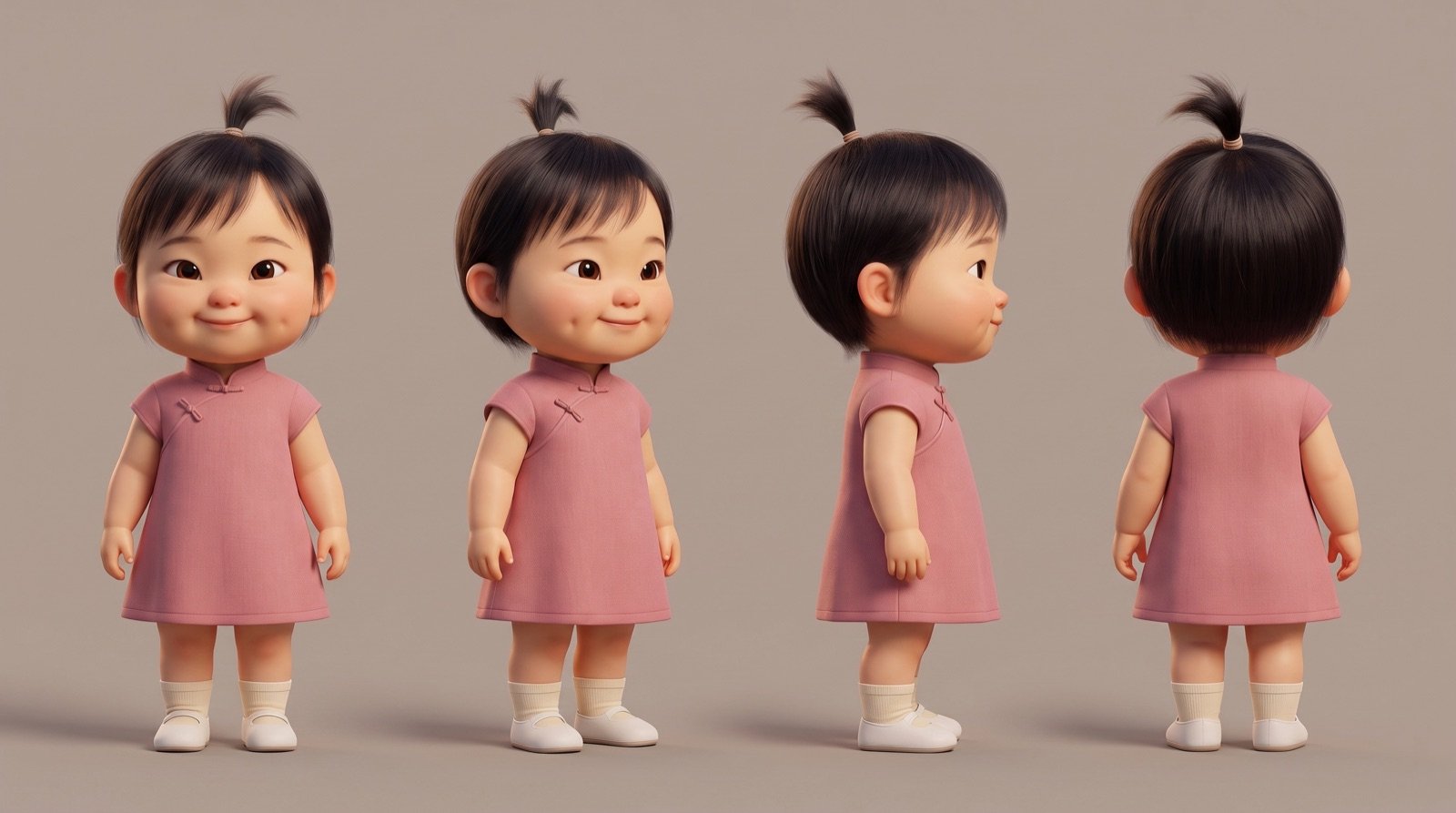
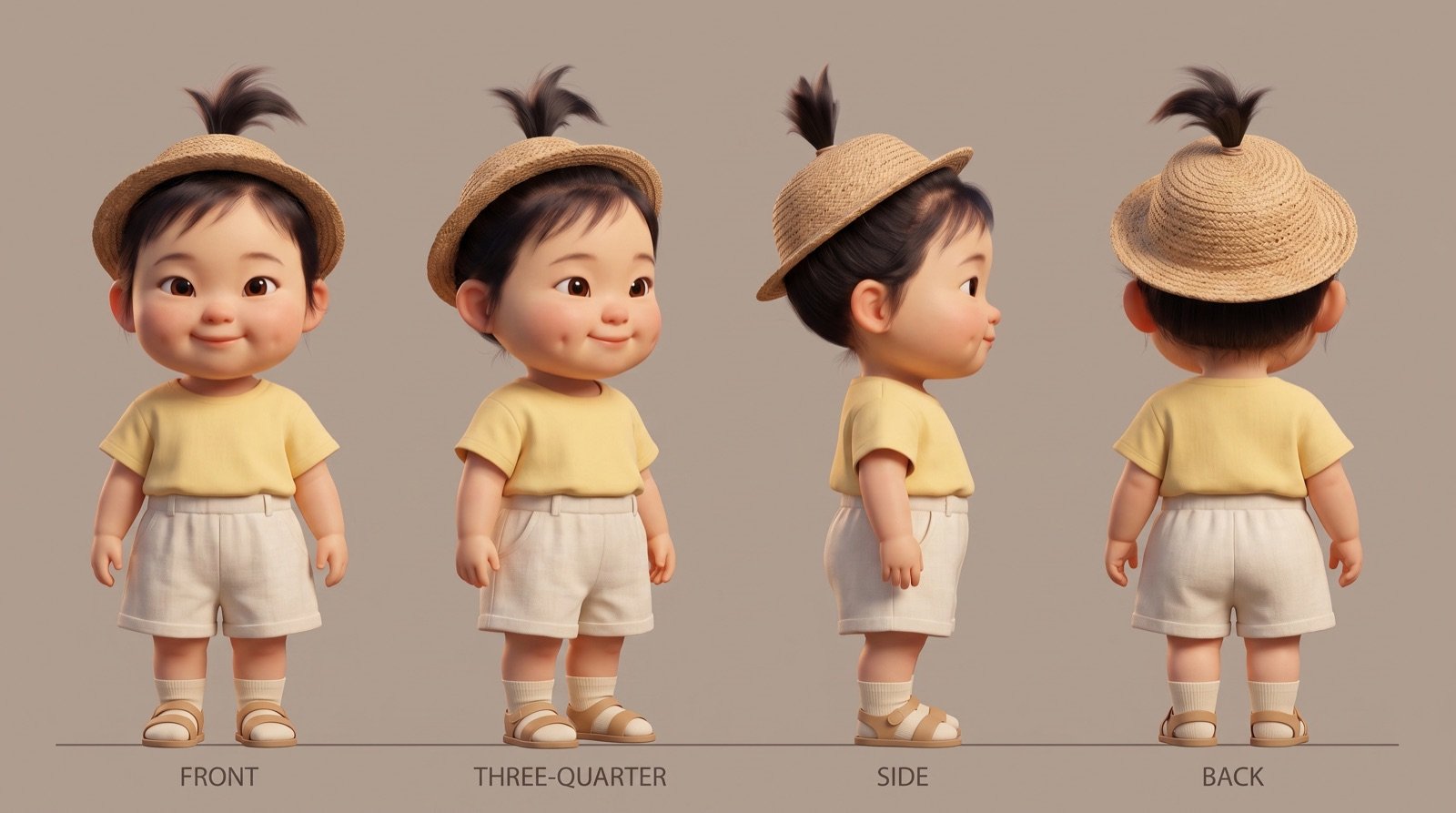
Finding the character
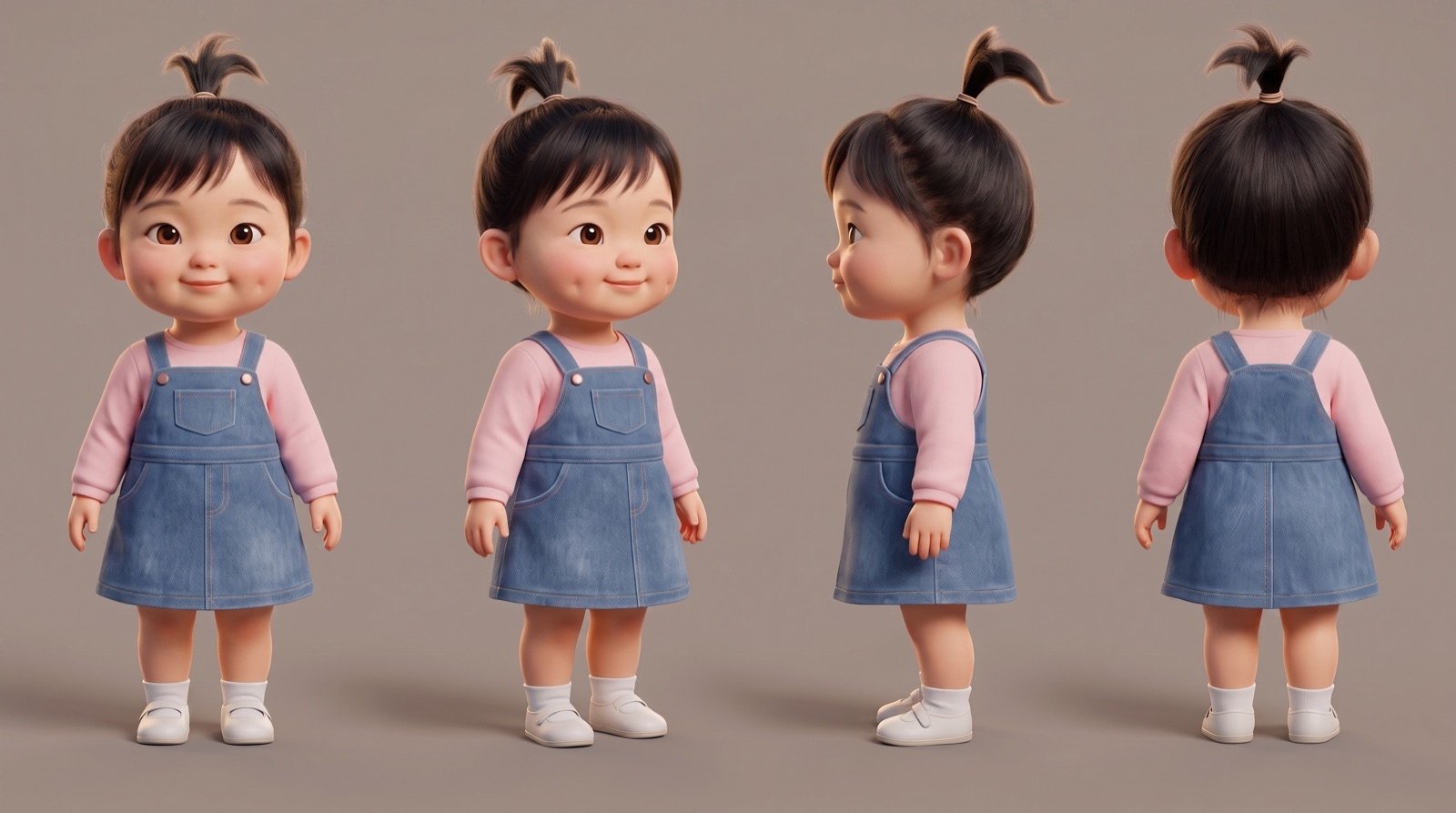
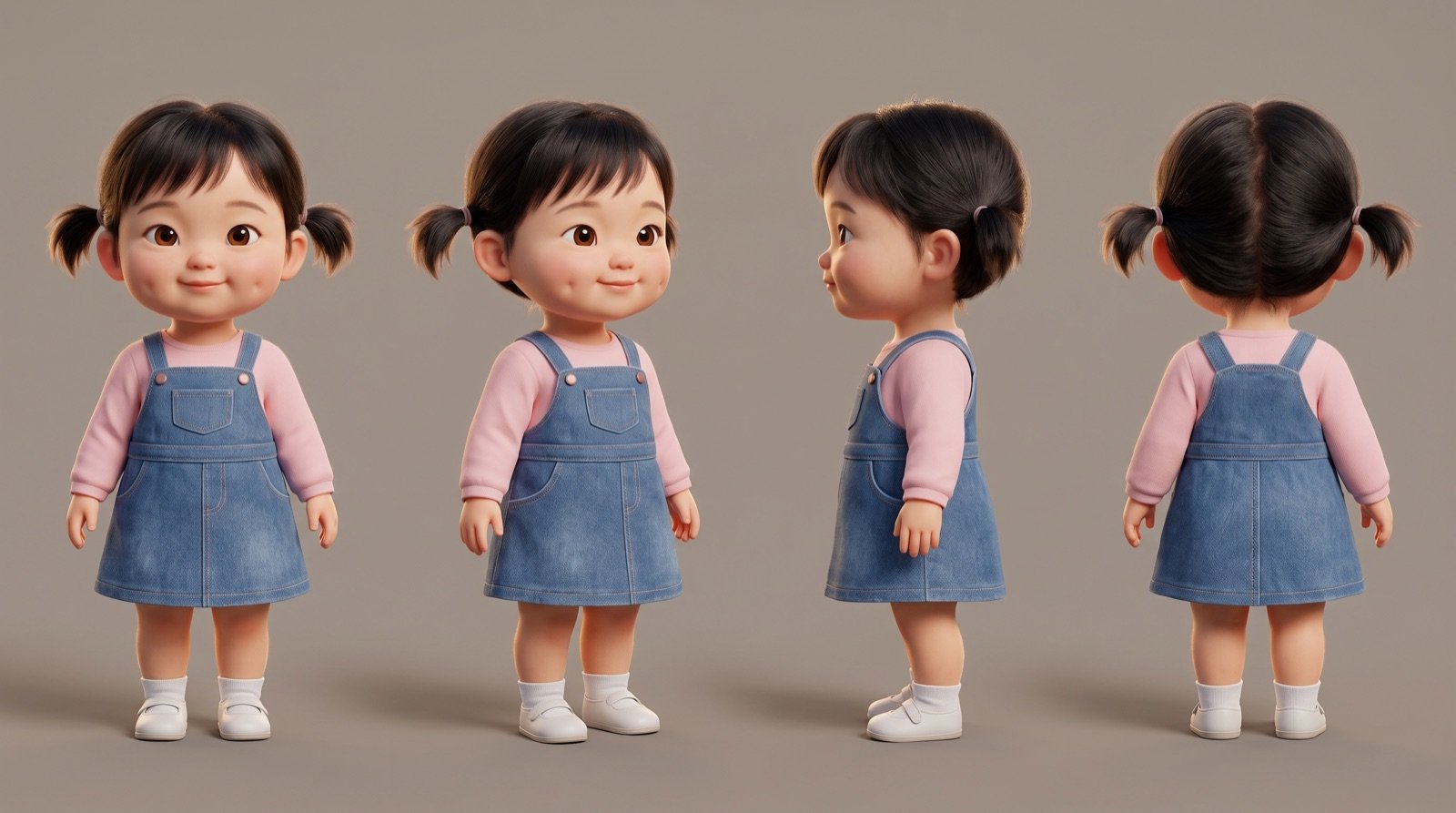
Four outfits. One made the film.
Before anything was locked, Ellie was drawn as a set of options — different outfits, different hair — and each one rendered as a full turnaround rather than a single pose. Choosing from turnarounds instead of hero shots is what makes the decision survive contact with the actual shots.
Props & locations
The set gets sheeted too.
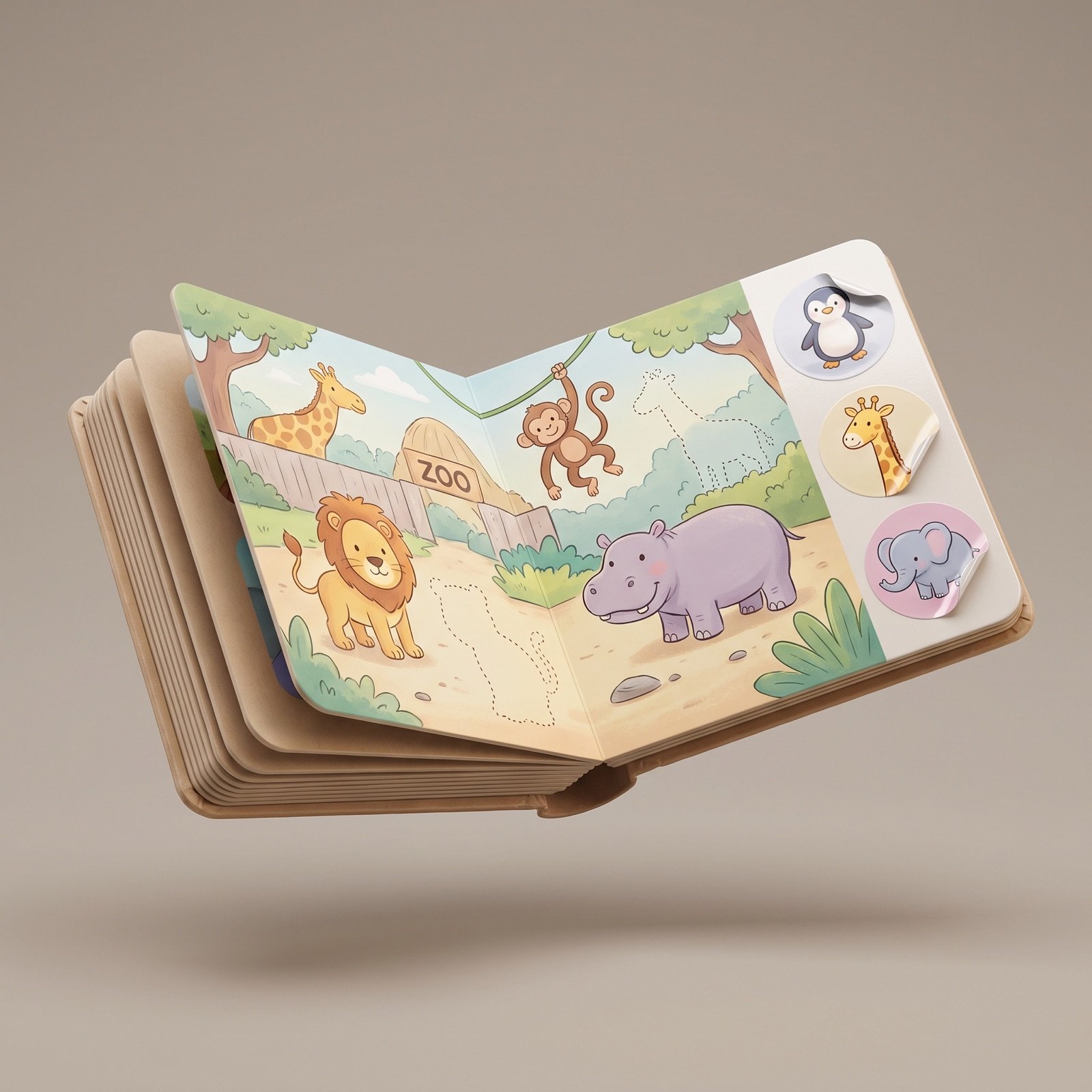
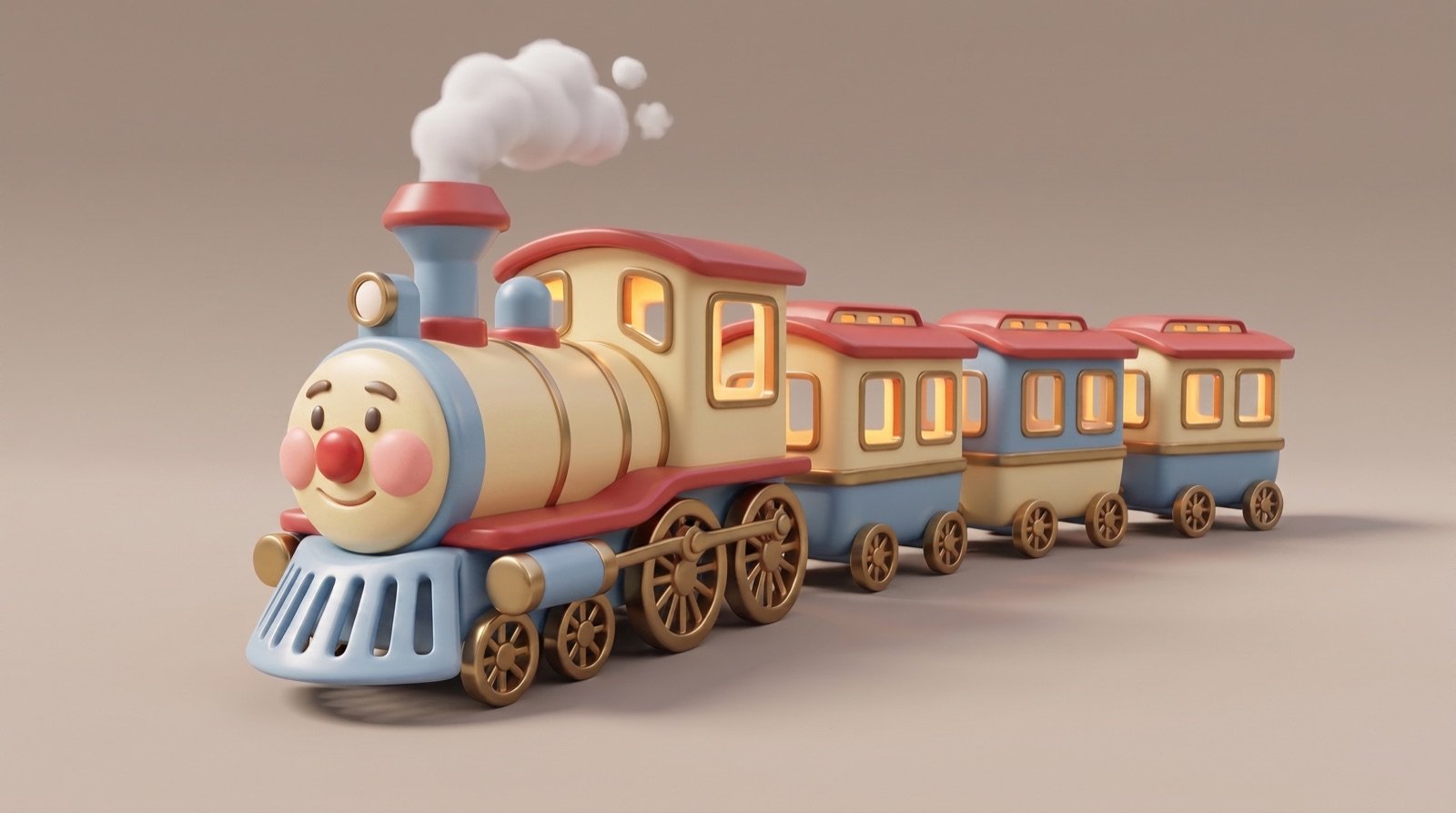
Props drift as badly as faces. The teddy bear and the sticker book carry across scenes, so both were resolved as prop sheets; the cabin, the station, the forest and the finale lake were locked as plates before shooting into them.
The prompt template
Same seven headings, every single shot.
- Style — the render target, and what it must not look like
- Pacing — cut count and shot lengths, stated as a minimum
- Numbers — how many creatures, varied deliberately per scene
- Lighting — time of day and quality of light
- Color — the palette, and which colour is the accent
- Camera — frame rate, motion blur, movement vocabulary
- Acting — what the performance has to read as
Style: Pixar-style 3D animated feature film. Soft stylized CG — painterly warmth, high-end render. NOT photoreal, NOT plush or toy-like animals.
Pacing: Lively but gentle kids-film rhythm. MINIMUM 5 cuts, lengths VARIED 2–5 seconds. This is the BREATHER scene between two loud ones — the comedy comes from SLOWNESS, but every cut still carries motion. No frozen pauses.
Numbers variety: ONE lone sloth — the quietest, smallest-count beat in the film, placed deliberately between the zebra herd and the penguin colony.
Lighting: Soft warm late-afternoon light filtering green through leaves, gentle and hazy.
Color: Soft mossy greens outside, cream/honey cabin wood, teal seats; Ellie's pink is the accent.
Camera: Calm and cinematic. 24fps, gentle motion blur. Static or the slowest drifts — let the sloth's slowness play.
Scene 7, “The slow gag” — verbatim from the shotlist in the kit.
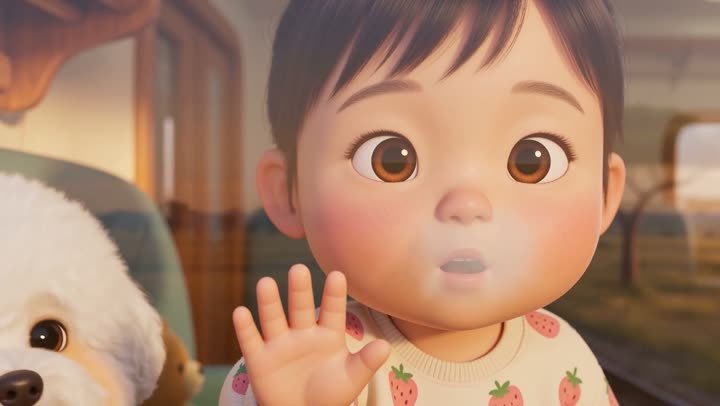
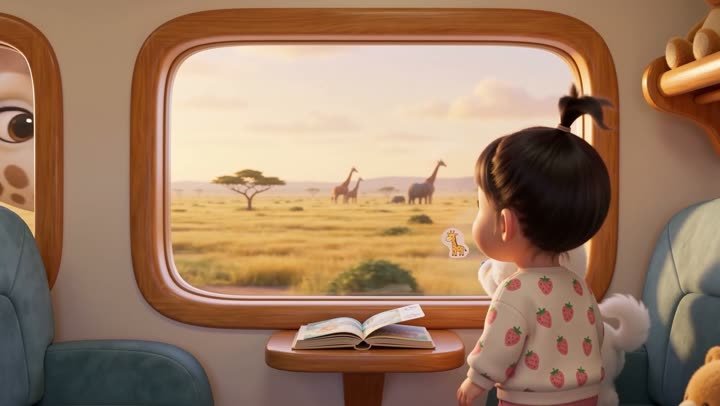
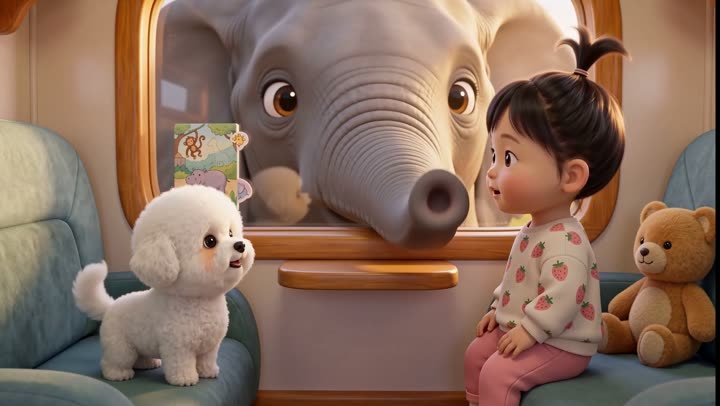
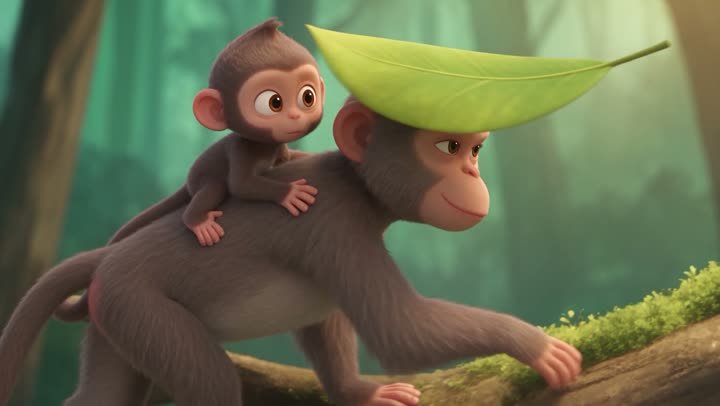
The finished cut
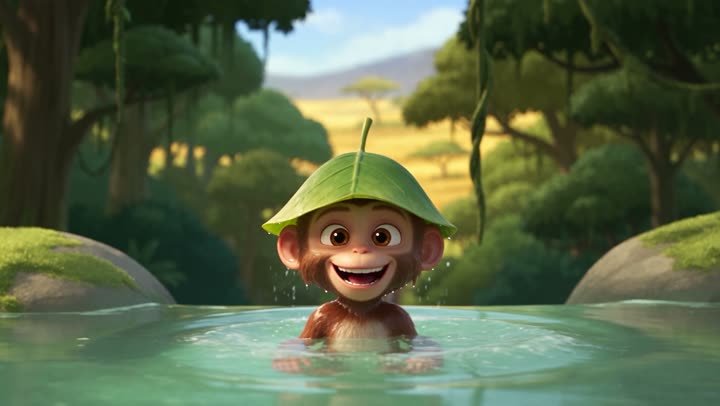
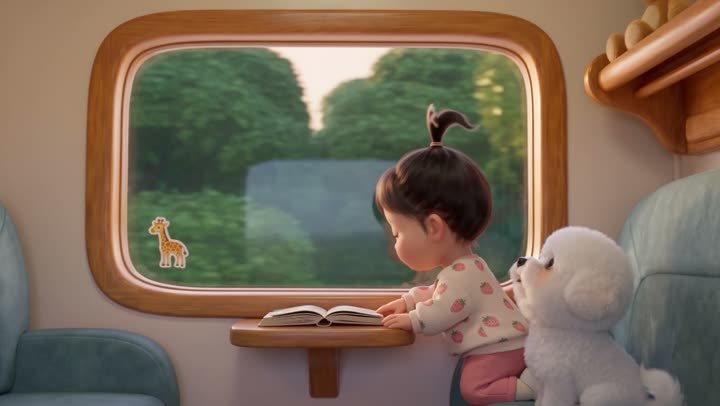
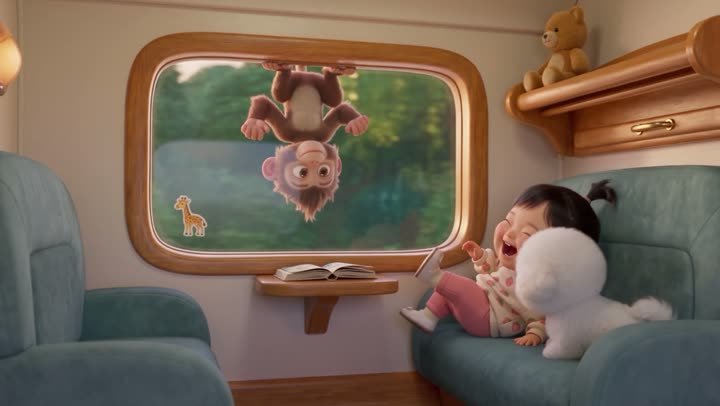
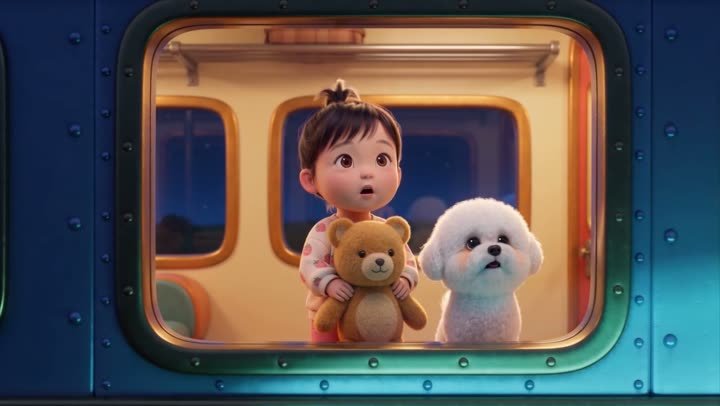
Twelve frames, front to back.
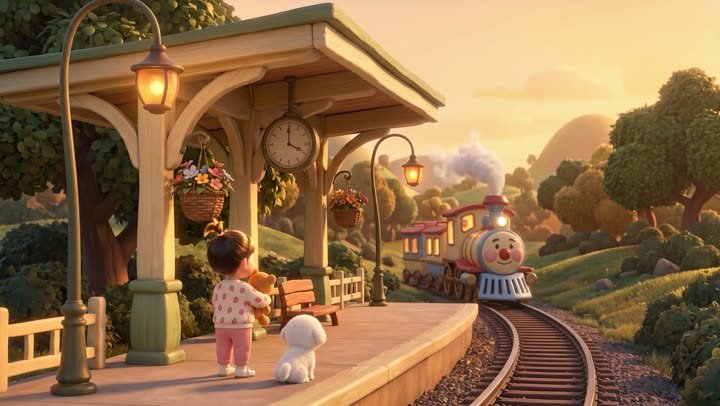
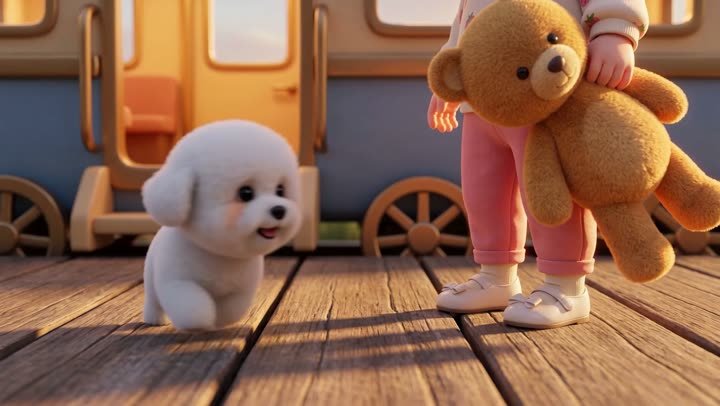
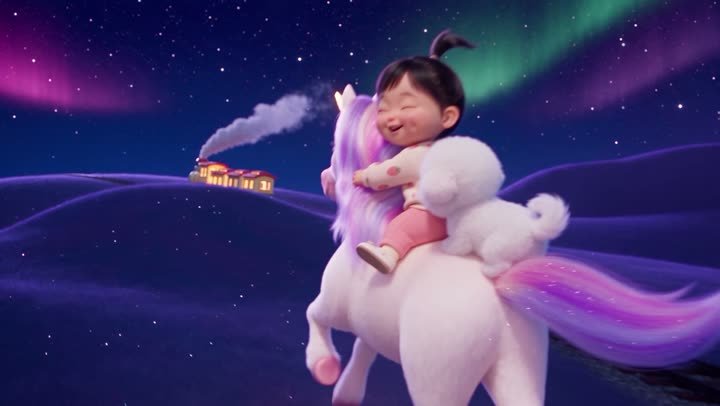
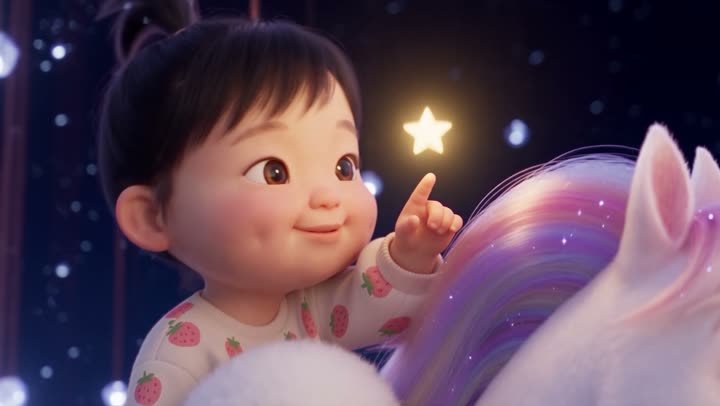
Pulled evenly across the finished film. The point is the spread — station, savanna, flamingos, forest, cabin comedy, sunset, night — held together by one palette and one girl who looks like herself in every one of them.
What got cut
Five scenes died so the ending could work.
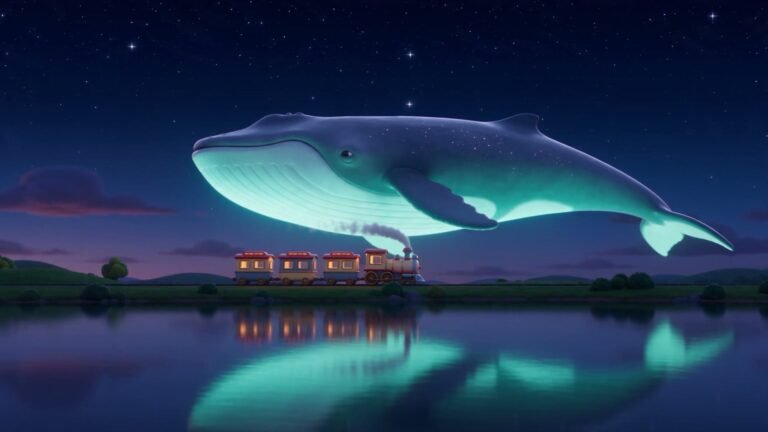
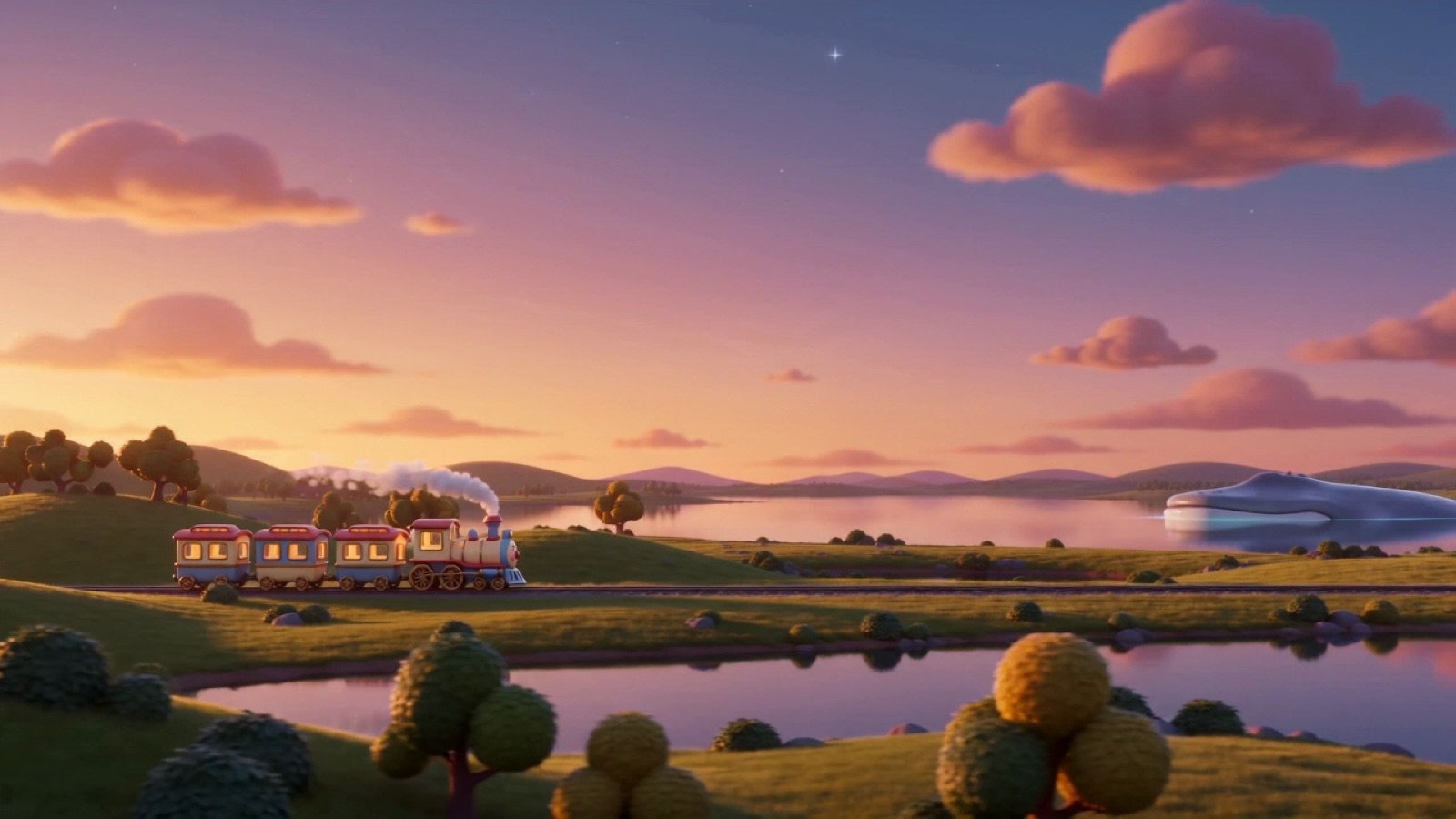
The shotlist planned a night sequence in three parts — a whale crossing the sky, plankton drifting into the cabin, a lullaby. Shot that way it sagged. All three collapsed into a single thirty-second generation, and the film got better by getting shorter.
1 · All aboard — the train pulls in, Ellie lights up, they board and settle.
2 · Safari reveal — she presses the giraffe sticker to the glass and the faraway giraffe comes close.
3 · Safari alongside — she feeds the giraffe; the elephant’s trunk boops Mochi.
4 · Pink wave — a thousand flamingos lift off, then the zebra herd thunders in below.
5 · Forest interlude — the film leaves the train for the first time.
5B · The swing — first-person vine swings over the roof, handing off straight into Peekaboo.
6 · Peekaboo — the monkey hangs upside down at the glass and mirrors her every move. The biggest laugh.
7 · The slow gag — a sloth drifts past at one-tenth speed. The breather.
8 · The losing race — a penguin colony waddling hopelessly to keep up, until one belly-slides past.
9 · Splash and rainbow — the elephant herd sprays the carriage; she draws in the fogged glass.
10 · The hinge — sunset burns to night, a whale crosses the sky.
11 · Sea of stars — plankton drift into the dark cabin; one lands on her fingertip.
12 · Lullaby — she falls asleep hugging teddy as the stars draw her animal friends.
8 · FINALE — all three night beats, rebuilt as one 30-second generation cut to the song’s final 28 seconds.
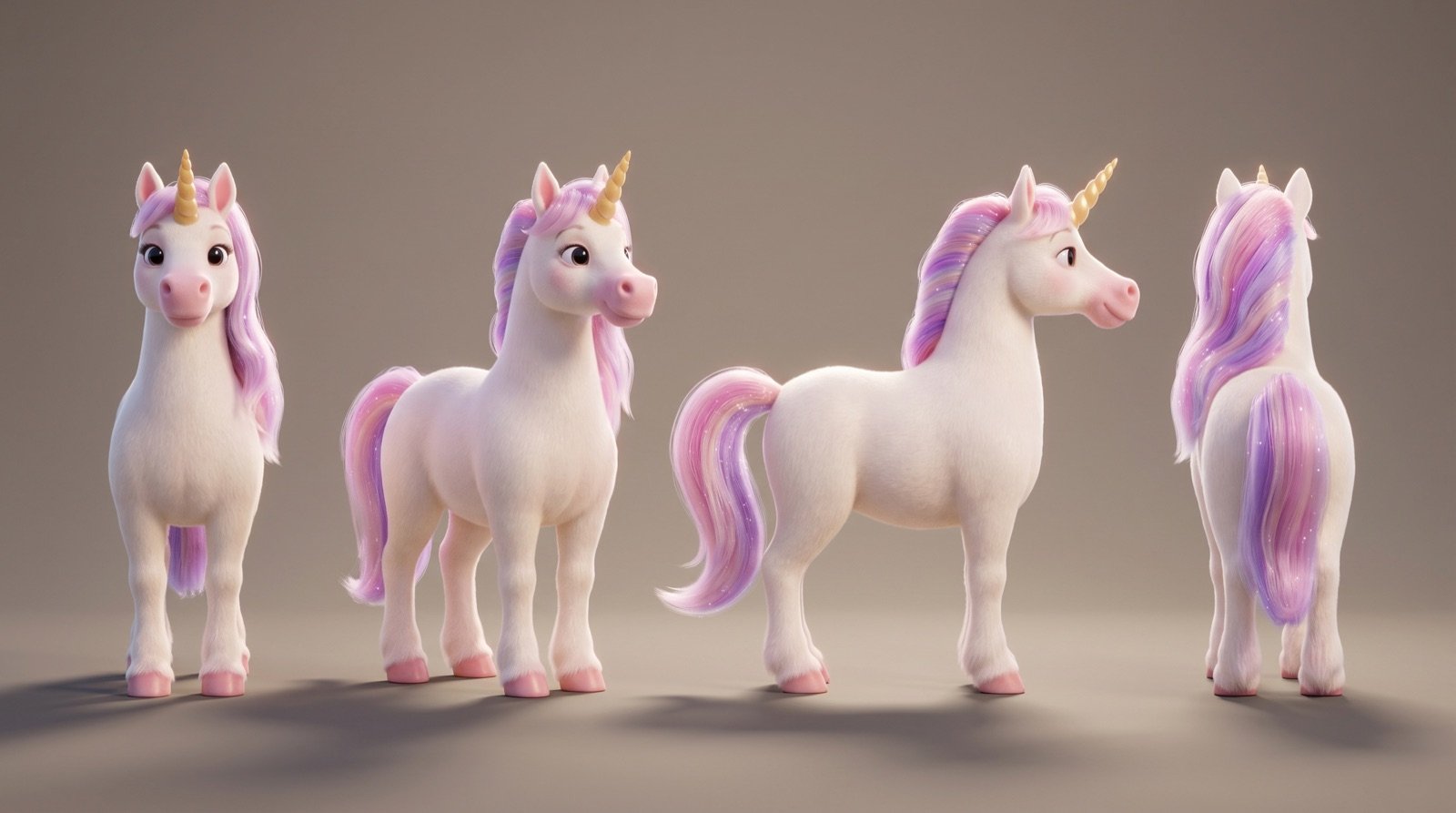
9 · Dream epilogue — one 20-second generation. The unicorn passes the window unseen, then she’s riding it through the stars, and the film closes on the same sleeping girl.
Sound
The song was written to the edit.
Lyrics written by Claude, generated with Suno, and shaped to the film’s pacing rather than dropped underneath it. Once the track existed it stopped being accompaniment and started setting structure — the last two scenes were cut to it rather than the other way round.